
Reviewed · NASHVILLE MUSIC MUSEUMS & STUDIO TOURS
Musicians Hall of Fame and Museum Admission Ticket in Nashville
Nashville’s Musicians Hall of Fame puts the spotlight where it belongs: not only on famous singers, but also on the players, engineers, producers, and instruments that made the songs work. You can see Joe Osborn’s Fender jazz bass, the control board from Jack’s Tracks Recording Studio, and the original stage where a young Jimi Hendrix played.
I especially like the real working artifacts, which give the museum more bite than a room of framed photos. I also like the hands-on GRAMMY Gallery, where you can sing, play instruments, try DJ equipment, and learn what happens behind a recording console. The main consideration is focus: if you want only current stars or Nashville country music, parts of this museum may feel dated or outside your main interest.
In This Review
- Key points to know
- Nashville music history beyond the famous names
- The Musicians Hall of Fame: instruments with stories
- The GRAMMY Museum Gallery is the playful half
- Why the real artifacts matter
- How long to spend inside
- Getting there from downtown Nashville
- Is $28 a fair price?
- Who will enjoy this museum most
- A few smart ways to plan your visit
- Should you book the Musicians Hall of Fame?
- FAQ
- Where is the Musicians Hall of Fame and Museum located?
- How much does admission cost?
- What does the ticket include?
- How long should I plan to stay?
- What are the opening hours?
- Can I play instruments at the museum?
- Can I sing at the GRAMMY Museum Gallery?
- Does the museum focus only on country music?
- Is the museum suitable for families?
- Can I cancel for a full refund?
Key points to know
- Joe Osborn’s Fender bass: See the instrument used on recordings by The Carpenters, the Mamas and the Papas, The Grass Roots, and Simon and Garfunkel.
- Jimi Hendrix’s original stage: A compact but memorable piece of music history.
- GRAMMY Museum Gallery access: Play electric drums, keyboard, bass, and guitar, or sing with Ray Charles and the Raelettes.
- More than country music: The exhibits cover many forms of American music and organize material by genres and time periods.
- Plan one to three hours: A quick visit works, but music fans can easily stay much longer with the films, reading, artifacts, and interactive stations.
- Good downtown value: Admission is $28 per person, and the museum is about a 15-minute walk from Nashville’s main Broadway area.
Nashville music history beyond the famous names
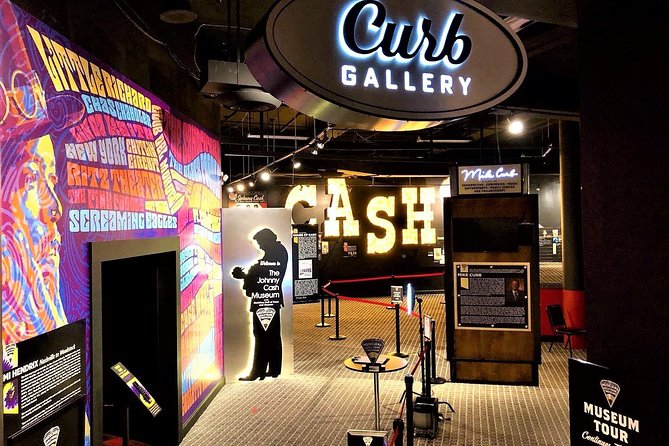
The Musicians Hall of Fame is different from a museum devoted mainly to performers. Its central idea is the working musician: the bassist who holds a song together, the drummer behind a hit, the engineer who shapes the sound, and the studio equipment that captures it.
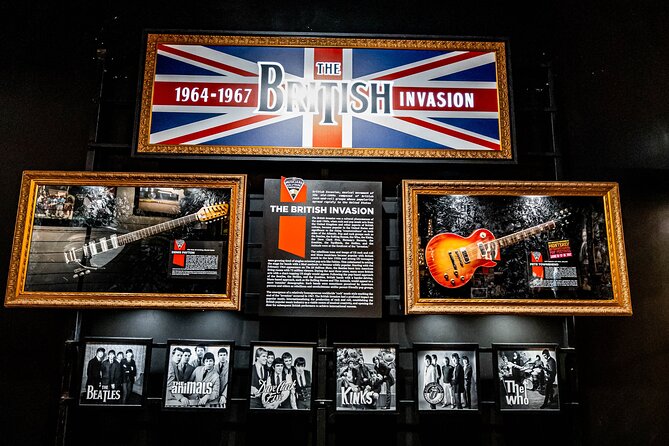
That approach gives you a broader view of American popular music. Nashville is strongly associated with country, but the exhibits reach well beyond it. You may encounter connections to pop, rock, soul, gospel, and other forms of American music.
I like this setup because it answers a question many music museums skip: Who actually played on that record? The displays connect famous songs with the people and tools behind them. If you enjoy liner notes, old recording gear, or the small details behind familiar songs, you will have plenty to read.
The museum is also arranged around genres and periods, making it easier to follow than a random collection of memorabilia. Still, the experience asks you to bring some interest in music history. A person who wants flashy celebrity displays and little reading may finish quickly.
More Nashville music museums:
- Discover Nashville City Tour with Entry to Ryman & Country Music Hall of Fame
★ 4.5 · 2,412 reviews - Country Music Hall of Fame and Museum Admission
★ 4.5 · 1,918 reviews - Nashville RCA Studio B & Country Music Hall of Fame Ticket Combo
★ 5.0 · 1,532 reviews
The Musicians Hall of Fame: instruments with stories
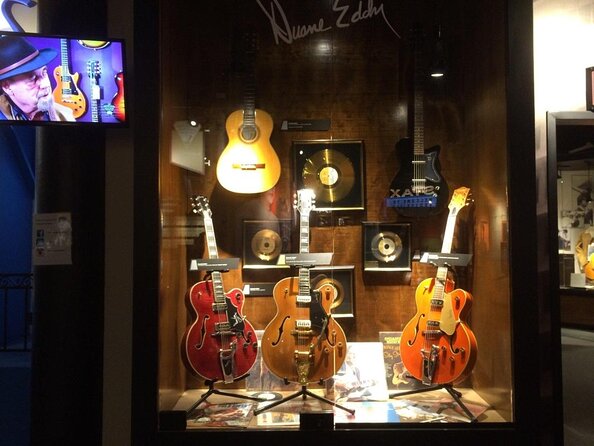
The museum’s strongest objects are the instruments and studio artifacts tied to specific recordings. These are not just examples of old equipment. Their value comes from the songs and artists connected to them.
A good example is Joe Osborn’s Fender jazz bass. The instrument is associated with hit recordings by The Carpenters, the Mamas and the Papas, The Grass Roots, and Simon and Garfunkel. Seeing the bass gives you a physical link to songs that otherwise exist only as sound.
The control board from Jack’s Tracks Recording Studio offers a different kind of connection. Garth Brooks recorded most of his hits there, so the board helps explain the studio side of the music business. It is a useful reminder that a song’s final sound depends on far more than the person holding the microphone.
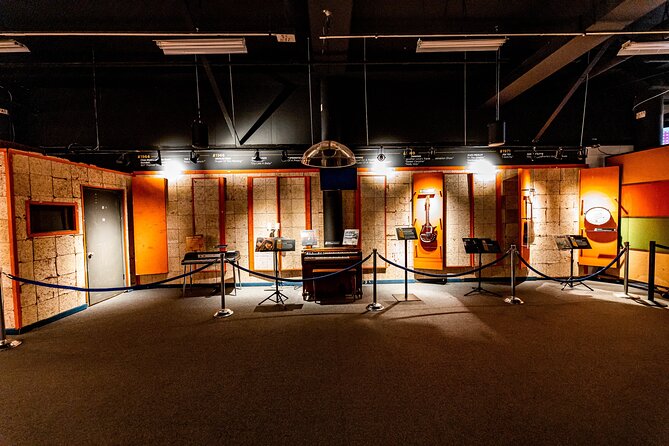
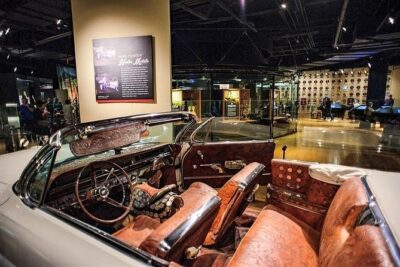
You will also see clothing, instruments, electronics, records, and other music memorabilia. Some displays focus on what artists wore at concerts, while others explain the tools used to record and perform. The quantity can be impressive, but it also means you should allow time to read rather than simply walk from case to case.
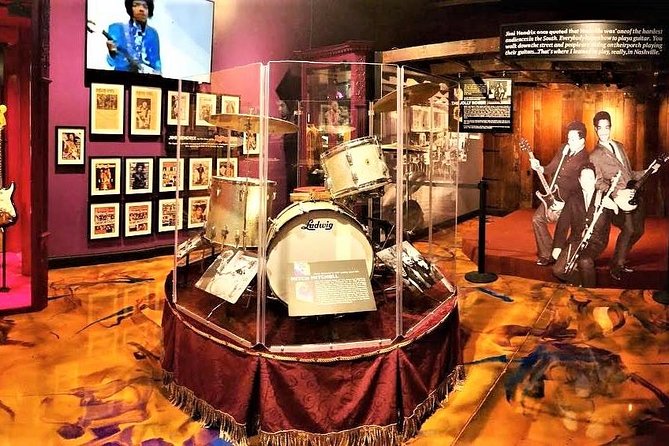
The Jimi Hendrix stage is one of the most memorable stops. It is the original stage where Hendrix once performed as a young musician. The exhibit does not require a long explanation to make an impression: you are looking at a real performance platform linked to one of rock music’s most recognizable figures.
The GRAMMY Museum Gallery is the playful half
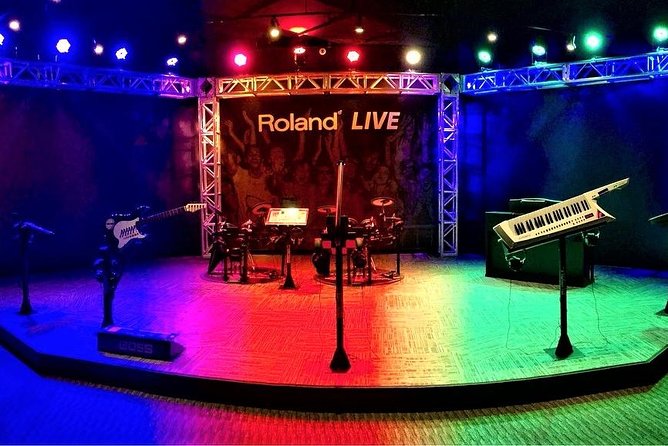
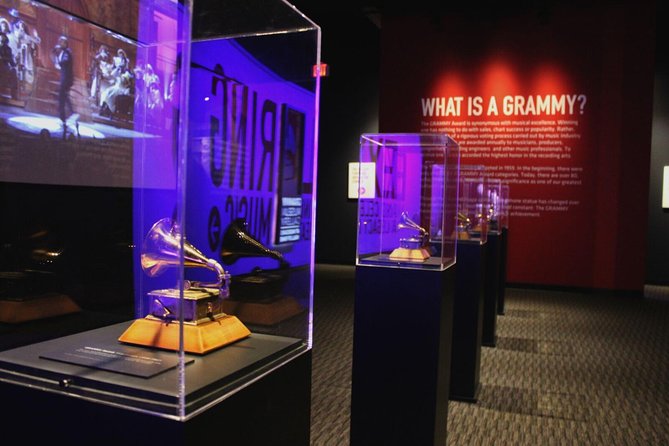
The GRAMMY Museum Gallery changes the pace. After looking at instruments and displays, you can put on headphones and try music-making activities yourself.
You can play electric drums, keyboard, bass, and guitar. You can also sing along with Ray Charles and the Raelettes. The private headphone setup lets you experiment without turning the gallery into a noisy free-for-all.
The gallery also covers the work behind the microphone. Songwriting, engineering, and producing exhibits let you try parts of the recording process. Other stations focus on singing, recording, and DJing.
For a fuller session, there is a recording studio and rehearsal room. The supplied information does not specify how long each activity takes or whether every station is always available, so think of these as hands-on features to explore during your visit rather than a scheduled class.
This area works particularly well for families and teenagers. It gives younger visitors something to do while also showing that music comes from choices about rhythm, sound, arrangement, and performance. Adults who have spent years listening to records may enjoy it for the same reason: you get a small taste of the decisions made behind the final track.
One practical point is that the interactive area may change. The museum has indicated that renovations to this part are planned, so some stations or their arrangement could differ when you visit.
Why the real artifacts matter
A museum display can feel distant when it presents only names and dates. Here, an old bass, a studio control board, or a performance stage gives the story a physical center.
The best exhibits link an object to a clear musical result. Joe Osborn’s bass is memorable because you can connect it to several well-known groups. The Jack’s Tracks control board works because it points to the recording of Garth Brooks’ hits. Hendrix’s stage matters because it represents a moment before a major artist became a household name.
You may also find older electronics and recording equipment. Some people will enjoy seeing the machinery and learning how earlier sessions worked. Others may find the displays less exciting if they do not care about studio technology or the mechanics of recording.
The museum does not appear to focus heavily on the newest music. That is worth knowing before you pay admission. If your main goal is a survey of recent chart history, this may not be your best Nashville stop. If you like older recordings and the people who made them, the material is much more rewarding.
More Nashville attraction tickets:
- Grand Ole Opry Show Admission Ticket
★ 4.5 · 2,518 reviews - Fontanel Zipline Forest Adventure at Nashville North
★ 5.0 · 682 reviews - Civil War Tour with Lotz House, Carter House & Carnton Admission from Nashville
★ 5.0 · 522 reviews - Nashville to Memphis Daytrip with Graceland VIP Tour and Sun Studio Admission
★ 5.0 · 503 reviews
How long to spend inside
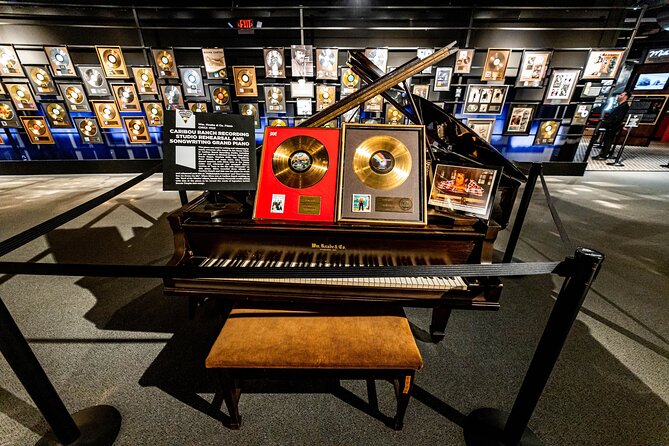
The official estimate is one to three hours, and that range makes sense. You can move through the main displays in about an hour if you read selectively and spend little time at the interactive stations.
Give yourself closer to two or three hours if you want to watch films, read the panels, try several instruments, and explore the GRAMMY Gallery. A music fan who takes time with the artifacts could easily make this a substantial part of an afternoon.
Your group will affect the timing. A parent with a teenager may stay longer because of the instrument and singing stations. A couple interested in recording history may spend more time at the studio exhibits. A casual visitor may find the museum complete in a shorter visit.
The museum is open Monday through Saturday from 10 a.m. to 5 p.m. The stated operating schedule covers January 1, 2022 through December 10, 2026, so check the current schedule when planning around a Sunday or a holiday.
Because admission is available during the museum’s open hours, you have flexibility within the day rather than being tied to a guided departure time. No guide names or scheduled tour commentary are provided, so expect a self-directed museum visit.
Getting there from downtown Nashville
The museum is in downtown Nashville and near public transportation. It is also about a 15-minute walk from the main Broadway area, according to the practical guidance available for the attraction.
That distance is manageable, but it may feel longer if you are walking from a parking garage. Parking location can make more difference than the museum’s address suggests. If you have mobility concerns, check your route and transport options before setting out.
The location is slightly away from the thickest concentration of Broadway activity. I see that as a useful break from the loudest part of downtown, but it also means you should not expect to step out directly into the center of the honky-tonk strip.
A visit fits well before or after other downtown plans. Since the museum can take one to three hours, it works as a compact morning activity or as a change of pace after a busy stretch of live music.
Is $28 a fair price?
At $28 per person, the ticket is good value if you use both parts of the experience. The price includes admission to the Musicians Hall of Fame and access to the interactive GRAMMY Museum Gallery, so you are getting more than a single room of displays.
The value is strongest for people who spend at least two hours inside. The instruments and memorabilia provide the historical material, while the interactive gallery gives the ticket a more active side. If you rush through in 45 minutes, the price may feel less attractive.
Families should also consider that the hands-on exhibits can make the museum useful for different ages. Parents can read about artists and recording, while children or teenagers try instruments and singing stations. The museum gift shop offers souvenirs, but those cost extra.
Compared with a simple sightseeing stop, this is a focused museum visit. It will not replace a live Nashville performance, and it does not offer a concert or a guided studio tour. Its value comes from the combination of artifacts, context, and things you can try for yourself.
Who will enjoy this museum most
I would put this museum high on the list for:
- People who want Nashville music history beyond country music
- Families with children or teenagers who need interactive activities
- Fans of studio recording, instruments, and music production
- Visitors who enjoy learning the names of musicians behind major songs
- Anyone with two or three flexible hours downtown
You do not need to know every artist before arriving. The displays provide enough background to make the objects meaningful, though some sections will reward visitors who already have favorite songs or performers in mind.
The museum may be less satisfying if you want only modern performers, a short celebrity-focused exhibit, or a live music component. It is also not the same attraction as the Country Music Hall of Fame. Check the name carefully when booking, since the two museums offer different subjects and are easy to confuse.
A few smart ways to plan your visit
Start with enough time for both the main museum and the GRAMMY Gallery. If you only browse the cases, you may miss the part many people find most fun.
Bring curiosity about the process, not just the stars. Look at the recording equipment, read the details about engineers and producers, and notice how the displays connect musicians to specific songs.
If you are visiting with a family, let the hands-on stations shape your timing. You may finish the artifact displays faster than expected, then spend much longer playing instruments or singing.
Keep the closing time in mind. The museum is open until 5 p.m. Monday through Saturday, and a late arrival may leave too little time for the interactive exhibits.
The booking policy allows free cancellation up to 24 hours before the experience start time. Cancellations inside 24 hours are not refunded, and changes made inside that window are not accepted. The stated policy also says poor weather can lead to a new date or a full refund, although this is an indoor museum visit.
The maximum group size is listed as 100 people, but the experience itself is not presented as a guided group tour. Most people can participate, and confirmation is provided at booking.
Should you book the Musicians Hall of Fame?
Book it if you want to understand how familiar American songs were made, not just see portraits of famous singers. The Joe Osborn bass, Garth Brooks’ studio control board, and Jimi Hendrix’s original stage give the museum memorable anchors, while the GRAMMY Gallery keeps the visit active.
I would especially recommend it for a music-loving family, a first-time Nashville visitor with several hours downtown, or anyone who finds the making of a record as interesting as the performer on the cover. At $28, the combination of exhibits and interactive stations makes sense when you take your time.
Skip it if your Nashville plans are tightly focused on current music, live shows, or country music alone. In that case, another attraction may fit better. But if you have room for a museum that gives working musicians and studio craft their due, this is a worthwhile stop a short walk from Broadway.
FAQ
Where is the Musicians Hall of Fame and Museum located?
It is located in the heart of downtown Nashville, USA. It is near public transportation and about a 15-minute walk from Nashville’s main Broadway area.
How much does admission cost?
Admission costs $28 per person.
What does the ticket include?
The ticket includes admission to the Musicians Hall of Fame and access to the interactive GRAMMY Museum Gallery.
How long should I plan to stay?
Plan on one to three hours. A shorter visit is possible, but you may want more time for the films, reading, artifacts, and interactive activities.
What are the opening hours?
The museum is open Monday through Saturday from 10 a.m. to 5 p.m. The provided schedule covers January 1, 2022 through December 10, 2026.
Can I play instruments at the museum?
Yes. In the GRAMMY Museum Gallery, you can try electric drums, keyboard, bass, and guitar.
Can I sing at the GRAMMY Museum Gallery?
Yes. The gallery includes singing activities, including singing along with Ray Charles and the Raelettes.
Does the museum focus only on country music?
No. The museum represents many forms of American music and includes material organized by genres and historical periods.
Is the museum suitable for families?
Yes. Most people can participate, and the interactive displays offer activities for families, including playing instruments, singing, and learning about artists and music production.
Can I cancel for a full refund?
You can cancel up to 24 hours before the experience start time for a full refund. Cancellations made less than 24 hours in advance are not refunded, and changes inside that period are not accepted.
More Nashville Museums
- Nashville: Country Music Hall of Fame and Museum
★ 4.7 · 945 reviews - Nashville Fun Pass: Johnny Cash Museum, City Trolley, RCA Studio
★ 4.5 · 93 reviews - Nashville: Legends of Country Music Museum Entry Ticket
★ 3.2 · 12 reviews - Music Pass: Entry to 6 Museums, Trolley Tour, Ole Smoky Tasting
★ 4.0 · 5 reviews
Just added in Nashville
- Honky Tonk Party Shuttle Airport★ 4.0 · 3 reviews
- Nashville’s Hidden Gems E-bike Tour★ 5.0 · 3 reviews
- Airport to Hotel Private Transfer★ 5.0 · 3 reviews
- Nashville: 1-Hour Escape Room Adventure in Opry Mills★ 5.0 · 3 reviews
- Nashville: Drinkers & Thinkers Pub Crawl★ 5.0 · 3 reviews
- Nashville Airport: One-Way Private Transfer to Nashville★ 3.7 · 3 reviews
- Nashville: Custom Perfume or Cologne Making Experience★ 5.0 · 3 reviews
- Tennessee Fall Colors Hiking Tour★ 5.0 · 3 reviews
Nashville Music Museums & Studio Tours, compared.
Discover Nashville City Tour with Entry to Ryman & Country Music Hall of Fame
Read our review →
Country Music Hall of Fame and Museum Admission
Read our review →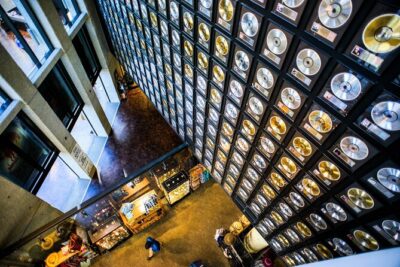
Nashville RCA Studio B & Country Music Hall of Fame Ticket Combo
Read our review →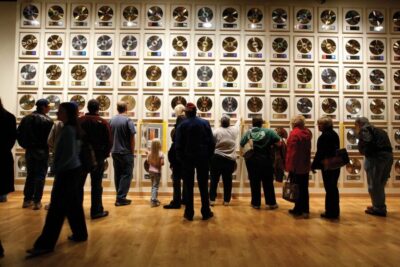

Country Music Hall of Fame, RCA Studio B, Hatch Show Combo Ticket
Read our review →
Country Music Hall of Fame Admission with Audio Guide
Read our review →
Private Recording Studio Experience in Downtown Nashville
Read our review →
Nashville Fun Pass: Johnny Cash Museum, City Trolley, RCA Studio
Read our review →Browse the lists this tour appears in