
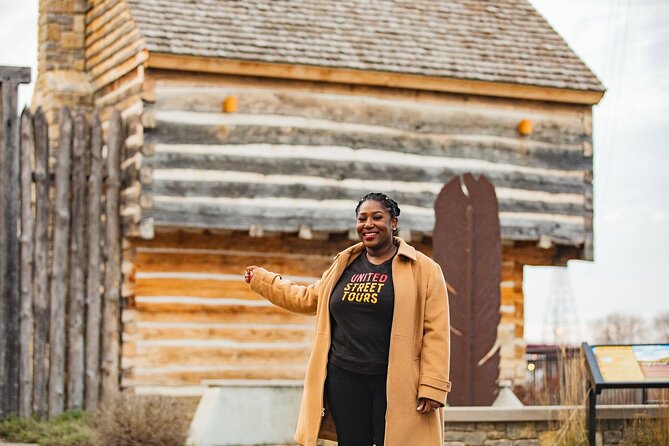
Reviewed · NASHVILLE HISTORY & CIVIL RIGHTS TOURS
Civil Rights Walking Tour of Nashville
Nashville’s Civil Rights story is not tucked away in a single museum. It is written across downtown, in courthouse steps, public art, historic buildings, and the memories attached to ordinary streets. This two-hour walking tour gives you a useful framework for seeing those places, rather than leaving you to guess what happened where.
I like the way the route fits neatly into a day of sightseeing, and I like the mix of outdoor stops and indoor interpretation. The guides also bring more than dates and names. Lauren, one guide named in the tour feedback, shared both historical context and her own perspective, which can make the subject feel more immediate.
The main consideration is that the route may not match every expectation. One person found the listed stops different from what they had pictured, though the Civil Rights exhibition at the library became a favorite part of the experience. You should also be comfortable walking for about two hours.
In This Review
- Key points to know before you book
- Why Nashville’s Civil Rights story belongs on foot
- Starting at the Nashville Visitor Center
- United Street Tours and the tone of the experience
- The Witness Walls: public art with a purpose
- Davidson County Courthouse and the meaning of civic space
- The National Museum of African American Music
- What the library exhibition adds
- How much value does a two-hour tour offer?
- Practical planning for the walk
- Who will get the most from this Nashville tour?
- Should you book the Civil Rights Walking Tour of Nashville?
- FAQ
- Where does the Civil Rights Walking Tour of Nashville begin?
- Where does the tour end?
- How long does the tour last?
- What language is the tour offered in?
- What is included in the tour?
- Are hotel transportation, food, or drinks included?
- What places are included on the route?
- How large can the group be?
- Is the tour suitable for people with limited mobility, and are service animals allowed?
- When will booking confirmation arrive?
- Can I cancel or change the booking?
Key points to know before you book
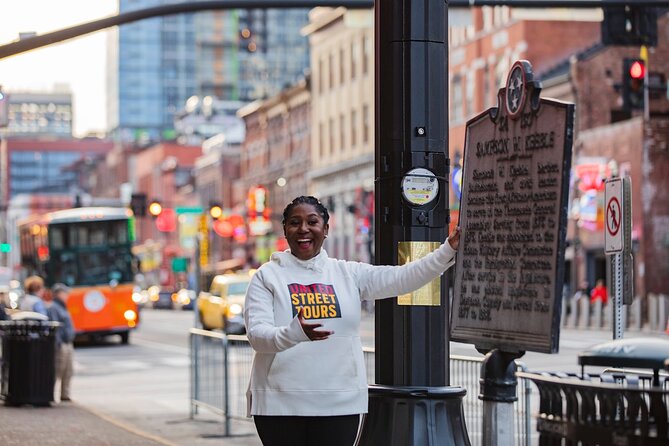
- Downtown starting point: Meet at the Nashville Visitor Center at 501 Broadway, close to Nashville’s main sightseeing zone.
- A citywide story in a compact route: The walk links murals, the courthouse area, and a major African American cultural institution.
- Personal guide perspective: Guides such as Lauren add lived interpretation alongside the historical account.
- Useful early in your visit: The tour can help you understand downtown Nashville before you explore more on your own.
- Small enough to stay focused, but not private: Groups can reach 30 people, so ask questions when the group pauses.
- Plan for steady walking: A moderate level of physical fitness is recommended, and hotel pickup is not provided.
Why Nashville’s Civil Rights story belongs on foot
Music often gets top billing in Nashville, but the city’s Civil Rights story gives downtown a different meaning. A walking route helps you connect public spaces with the events that took place there. You are not simply looking at a mural or courthouse facade. You are learning why that place matters.
The tour is built for visitors who want context without giving up half a day. In roughly two hours, you move between several downtown points and hear stories that can be easy to miss when you explore alone. That makes it a sensible addition to a first day in the city, especially if you want more than the usual music venues and shopping streets.
I also like the balance between visible places and guided explanation. Nashville’s streets do not always announce their historical importance. A professional guide can point out what deserves your attention, explain the local setting, and connect one stop to the next.
The experience is offered in English. The group may include as many as 30 people, which is large enough to create a lively walk but not the same as a private tour. If you want a long, quiet conversation with the guide, arrive ready to ask questions during the stops rather than expecting uninterrupted discussion while walking.
More Nashville history tours:
- Belle Meade Guided Mansion Tour with Complimentary Wine Tasting
★ 4.5 · 2,189 reviews - Civil War Tour with Lotz House, Carter House & Carnton Admission from Nashville
★ 5.0 · 522 reviews - Journey to Jubilee Guided Tour at Belle Meade with Wine Tasting
★ 4.5 · 396 reviews
Starting at the Nashville Visitor Center
The meeting point is the Nashville Visitor Center at 501 Broadway, Nashville, Tennessee 37203. This is a practical place to begin because it is central and easy to combine with other downtown plans.
You do not get hotel pickup or drop-off, so you need to make your own way to the start. The tour is near public transportation, which helps if your accommodation is outside the central area. Mobile ticketing also keeps the arrival routine simple, although you should have your confirmation available.
The tour ends in downtown Nashville rather than returning you to the visitor center. That is useful if you want to continue sightseeing, find lunch, visit another attraction, or walk toward the city’s music venues. It also means you should not treat the finish as a round-trip transfer.
Arrive with practical shoes and a little breathing room before the start. The route is not described as strenuous, but the moderate fitness recommendation tells you to expect regular walking and time on your feet.
United Street Tours and the tone of the experience
United Street Tours is the provider, and the professional guide is the heart of the experience. The organization appears in the route information as a stop, but its more important role is as the company organizing the walk.
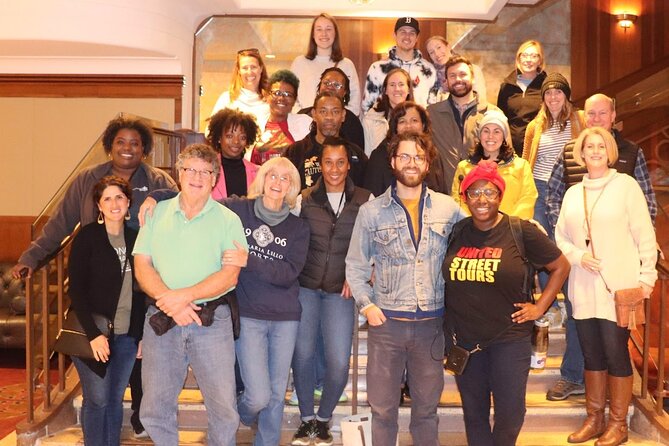
The strongest part of this format is the human voice. A guide can explain the official record, then add the local meaning behind it. One guide, Lauren, was described as sweet and informative, while another guide shared her own perspective along with the historical account. That combination matters on a subject where a list of dates would feel thin.
You should expect an engaging but serious tour. The guide’s job is not just to lead you from one address to another. It is to help you understand how Nashville functioned during the Civil Rights era and why the city played an important part in the movement.
At the same time, personal perspective can vary by guide. That is not necessarily a weakness. It means the experience may feel more like a guided conversation than a fixed audio recording. If you want the most from it, listen for the connection between the guide’s interpretation and the physical places around you.
The Witness Walls: public art with a purpose
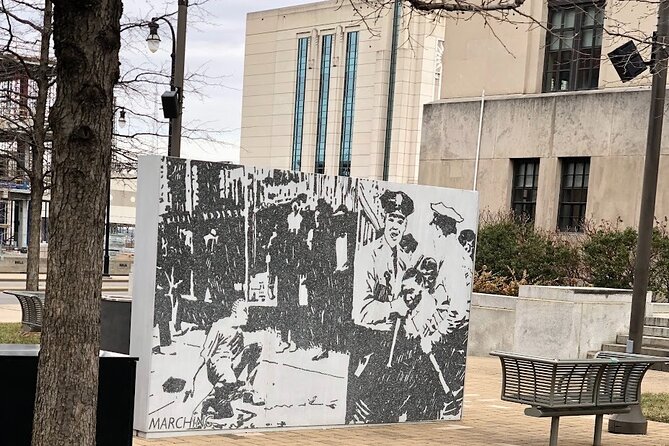
The Witness Walls are one of the route’s visual highlights. Murals and public art can make a historical subject easier to approach because they give you something concrete to study while the guide explains the people and events represented.
Do not rush through this stop. Look at the scale, the faces, and the way the artwork uses a public wall to keep memory in the open. The point is not simply to take a photograph. The guide’s explanation gives the artwork a place within Nashville’s larger Civil Rights story.
This is also one of the reasons the tour works better than an unplanned stroll. You might pass public art on your own and appreciate its color without understanding its subject. With a guide, you get the background needed to read the place more carefully.
The drawback is that public art is exposed to weather and street noise. You may not have the quiet atmosphere of a museum gallery. Still, the outdoor setting is part of the lesson. Civil Rights memory is presented in spaces used by the public, not only behind exhibition doors.
More Nashville walking tours:
- Downtown Nashville Guided Sightseeing Walking Tour
★ 5.0 · 1,304 reviews - Walking Food & Drink Tour of Downtown Nashville
★ 5.0 · 1,140 reviews - The Ghosts of Nashville Night-Time Walking Tour
★ 4.5 · 799 reviews - “Murder in Music City” Night-Time Ghost Walking Tour of Nashville
★ 4.5 · 742 reviews
Davidson County Courthouse and the meaning of civic space
The Davidson County Courthouse offers a different kind of stop. Here, the focus shifts from mural work to the machinery of local government and the public spaces where civic decisions take shape.
A courthouse can look like an ordinary downtown building if nobody explains its role. The guide helps you connect the architecture and setting with Nashville’s struggles over equality, public participation, and access to justice. That context is the real reason to include it on a Civil Rights walk.
This stop also gives the route a useful change of pace. You are not only hearing personal stories or looking at artwork. You are considering how public institutions affect daily life and how a movement for rights meets the structures of government.
Your experience here will depend on the guide’s presentation and the conditions around the courthouse. It is not promoted as a full interior courthouse tour, so you should not book it expecting extended access inside. Think of it as a civic landmark viewed within a larger walking narrative.
The National Museum of African American Music
The National Museum of African American Music is listed as one of the stops. Its presence gives the tour a natural Nashville connection, linking the city’s music identity with African American creativity and cultural history.
This is especially useful if your Nashville plans already center on music. The stop encourages you to see music not only as entertainment, but also as part of a wider story about expression, community, identity, and social change.
The available details do not promise a full museum admission or a long self-guided visit, so you should not assume that the two-hour walk includes enough time to explore every gallery. Treat the stop as part of the guided route unless your booking information says otherwise.
The tour also includes a Civil Rights exhibition in a library setting, according to the experience details. That indoor component was singled out as a particularly strong part of the walk. Because the supplied route lists the National Museum of African American Music while the detailed feedback refers to a library exhibition, check the exact stop arrangement when you receive your confirmation. This is the clearest point where the advertised sequence may differ from what you imagine.
What the library exhibition adds
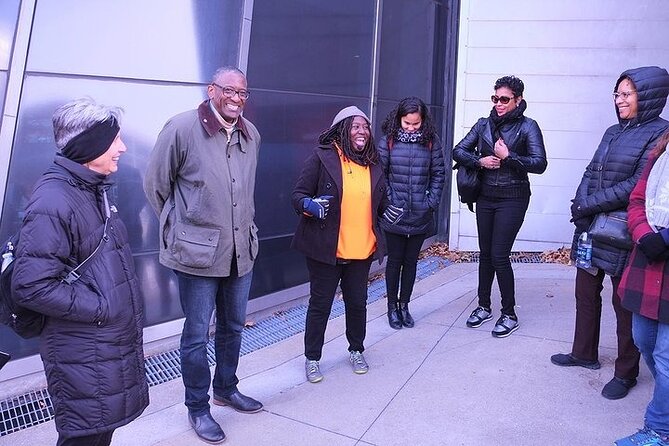
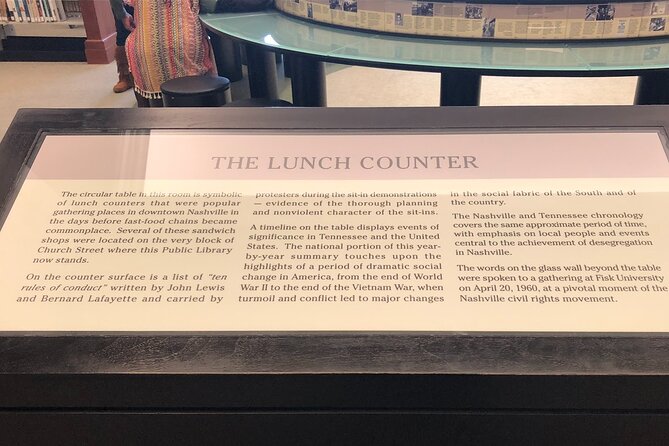
The Civil Rights room at the library gives the tour an indoor counterpoint to the outdoor sites. After seeing streets, murals, and civic buildings, you get a more focused presentation of the subject.
That change matters. Outdoor stops help you understand place, but an exhibition can provide photographs, text, objects, and a more concentrated historical account. It gives you time to pause and take in details that may be harder to absorb while standing on a sidewalk.
If the exhibition is part of your departure route, allow yourself to be mentally ready for a shift from walking commentary to display-based learning. The tour’s strongest rhythm appears to come from this variety: public art, a government landmark, a cultural institution, and an indoor Civil Rights presentation.
The exact exhibition arrangement is worth confirming before you go because the named route stops and the described library visit are not identical. That does not make the tour a poor choice. It simply means you should book it for the guided subject and overall route, not for a rigid promise that every stop will unfold in a particular order.
How much value does a two-hour tour offer?
No price is provided here, so I cannot judge the exact cost in dollars. I can judge what you are paying for: a professional English-language guide, a planned downtown route, interpretation at several meaningful sites, and the time saved by not researching each location yourself.
For a short visit, that can be good value. The tour fits into a morning or afternoon and leaves room for other Nashville plans. It may also improve the rest of your sightseeing because you will recognize the city’s public spaces with more context.
The value is lower if you already know Nashville’s Civil Rights history well or prefer to read at your own pace. It is also less suitable if you want extensive museum time, a private guide, or transportation between neighborhoods.
The maximum group size of 30 is worth keeping in mind when judging the price. You are buying access to a guided group experience, not an exclusive walk. The high satisfaction record and perfect overall rating suggest the format has worked well for the people who booked it, but your ideal group size may be different.
Practical planning for the walk
Wear shoes you can use comfortably for a two-hour urban walk. The tour requires a moderate physical fitness level, so plan for standing, moving between stops, and listening outdoors.
Service animals are allowed. The experience is near public transportation, but hotel pickup and drop-off are not included. Food and drinks are also not included, so plan those around the tour rather than expecting refreshments along the route.
The tour is offered in English only. That is important if you need interpretation in another language. Mobile tickets are accepted, and confirmation is sent within 48 hours of booking when space is available.
The activity is non-refundable and cannot be changed for any reason. I would book only after checking your Nashville schedule carefully. This matters more than usual for a short walking tour because a late change does not produce a refund or an amendment.
Who will get the most from this Nashville tour?
I would recommend it to first-time Nashville visitors who want to understand the city beyond its music reputation. It is also a good fit for anyone interested in American history, public art, local government, or the relationship between cultural expression and social change.
Families with older children may find the two-hour length manageable, provided everyone can keep up with the walking. The subject is serious, but the mix of outdoor landmarks and indoor interpretation keeps the route from feeling like a single long lecture.
It should suit you if you prefer a guide who explains meaning and shares some personal perspective. The experience is less ideal if you want a fully private conversation, extensive museum access, or a leisurely pace with long breaks.
I would place it early in a Nashville stay. The route can give you a better sense of downtown and help you notice details you might otherwise miss during later sightseeing. You can then decide which museums, exhibitions, or historic places deserve more of your time.
Should you book the Civil Rights Walking Tour of Nashville?
Book it if you want a compact, guided introduction to Nashville’s Civil Rights story and you appreciate a mix of murals, civic landmarks, cultural sites, and indoor interpretation. The personal guide perspective and the well-paced variety are the main reasons to choose it.
Think twice if your priority is a fixed museum itinerary or a private tour. The route may not match your mental picture of the listed stops, and the group can reach 30 people. Check the confirmed route, wear good walking shoes, and make sure your schedule is firm because the booking cannot be canceled or changed.
For a first visit, this is a practical way to give downtown Nashville more meaning in just two hours.
FAQ
Where does the Civil Rights Walking Tour of Nashville begin?
It begins at the Nashville Visitor Center, 501 Broadway, Nashville, TN 37203, USA.
Where does the tour end?
The tour ends in downtown Nashville, USA.
How long does the tour last?
The walking tour lasts approximately two hours.
What language is the tour offered in?
The tour is offered in English.
What is included in the tour?
A professional guide is included.
Are hotel transportation, food, or drinks included?
No. Hotel pickup and drop-off are not included, and food and drinks are not provided.
What places are included on the route?
The listed stops are United Street Tours, The Witness Walls, Davidson County Courthouse, and the National Museum of African American Music. The experience details also refer to a Civil Rights exhibition in a library setting.
How large can the group be?
The activity can have a maximum of 30 travelers.
Is the tour suitable for people with limited mobility, and are service animals allowed?
A moderate level of physical fitness is recommended. Service animals are allowed. The available information does not provide further accessibility details.
When will booking confirmation arrive?
Confirmation is sent within 48 hours of booking, subject to availability.
Can I cancel or change the booking?
No. The experience is non-refundable and cannot be changed for any reason.
Just added in Nashville
- Honky Tonk Party Shuttle Airport★ 4.0 · 3 reviews
- Nashville’s Hidden Gems E-bike Tour★ 5.0 · 3 reviews
- Airport to Hotel Private Transfer★ 5.0 · 3 reviews
- Nashville: 1-Hour Escape Room Adventure in Opry Mills★ 5.0 · 3 reviews
- Nashville: Drinkers & Thinkers Pub Crawl★ 5.0 · 3 reviews
- Tennessee Fall Colors Hiking Tour★ 5.0 · 3 reviews
- Nashville Airport: One-Way Private Transfer to Nashville★ 3.7 · 3 reviews
- Nashville: Custom Perfume or Cologne Making Experience★ 5.0 · 3 reviews
Nashville History & Civil Rights Tours, compared.
Belle Meade Guided Mansion Tour with Complimentary Wine Tasting
Read our review →
Civil War Tour with Lotz House, Carter House & Carnton Admission from Nashville
Read our review →
Journey to Jubilee Guided Tour at Belle Meade with Wine Tasting
Read our review →
Nashville Unveiled: The History, Music, and Hacks Tour!
Read our review →
Belmont Mansion General Admission Ticket in Nashville
Read our review →
Civil War History Tour – The Battle of Franklin, Tennessee
Read our review →
Legends of Music City Guided Historical Walking Tour
Read our review →
Browse the lists this tour appears in